
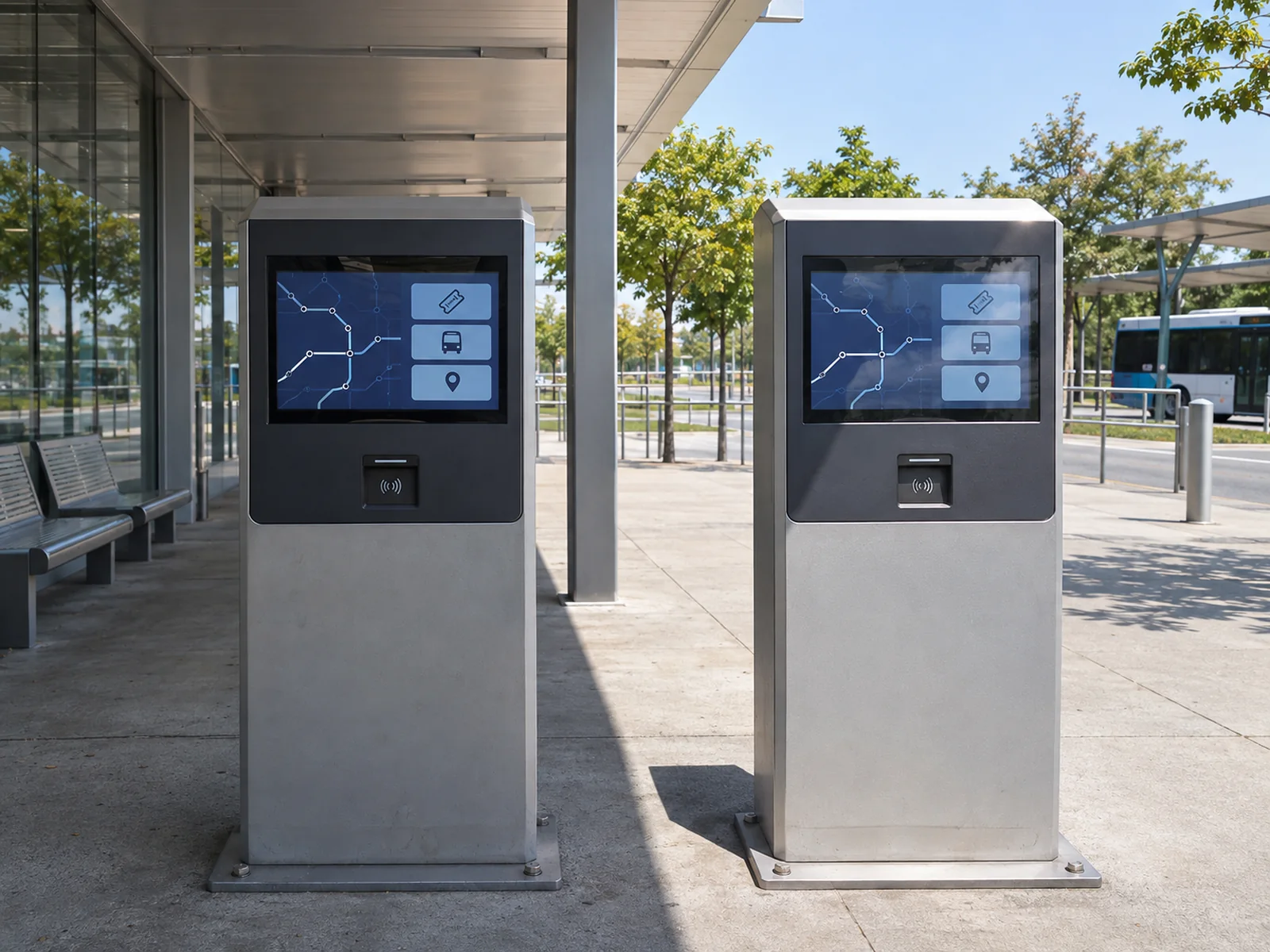
An outdoor ticket kiosk can look bright at switch-on and lose readability after the enclosure heats up. The cover glass also reflects light into the user's line of sight. When choosing between two 21.5-inch kiosk LCDs, compare what users can read through the finished front at operating temperature, then check what it costs in power and cooling to sustain that result.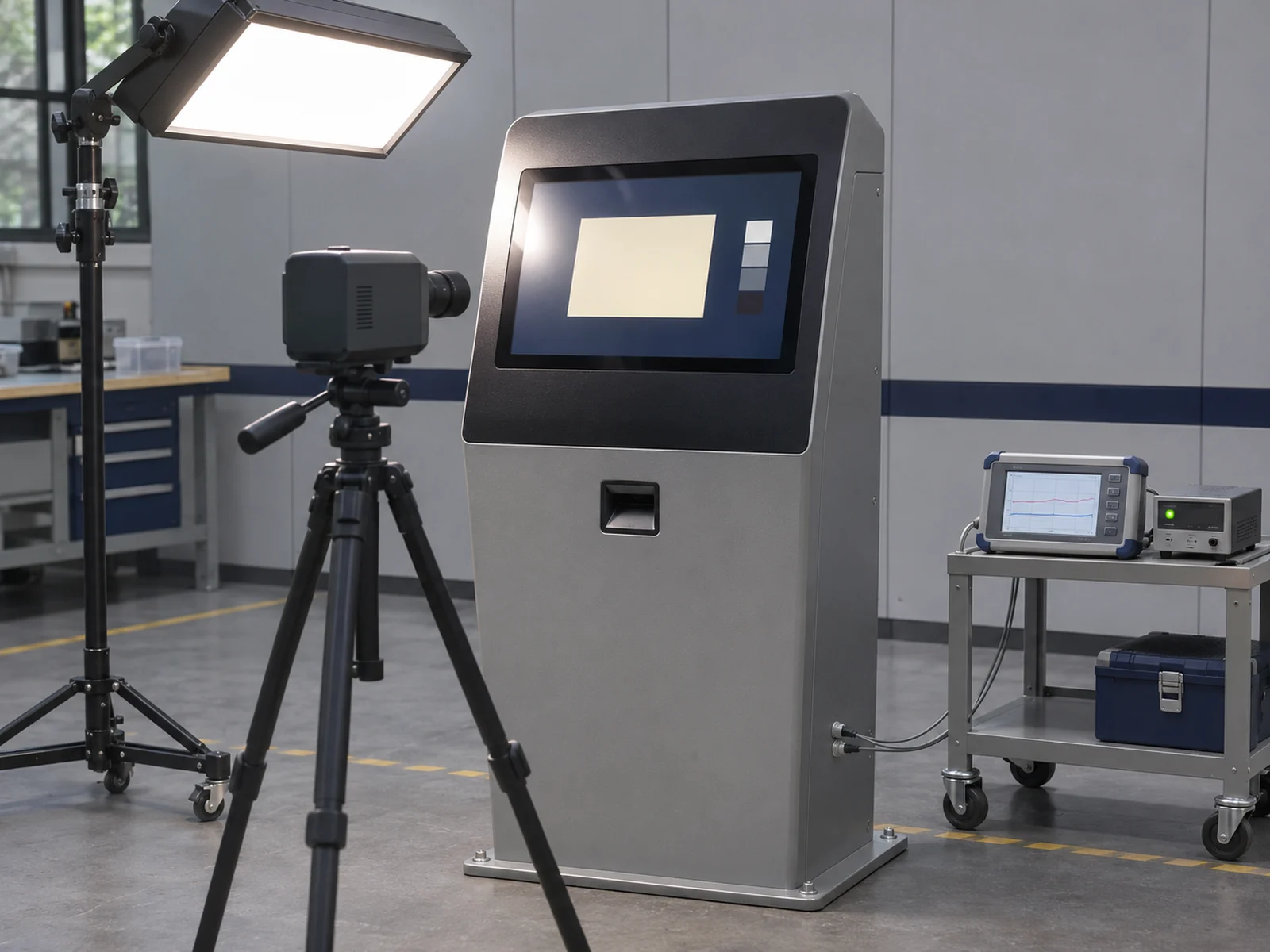
Claim: The buying decision depends on readable content through the installed cover at the worst required operating condition.
Which Brightness Class Fits the Kiosk?
Which GV215FHB-N14 Configuration Should You Sample?
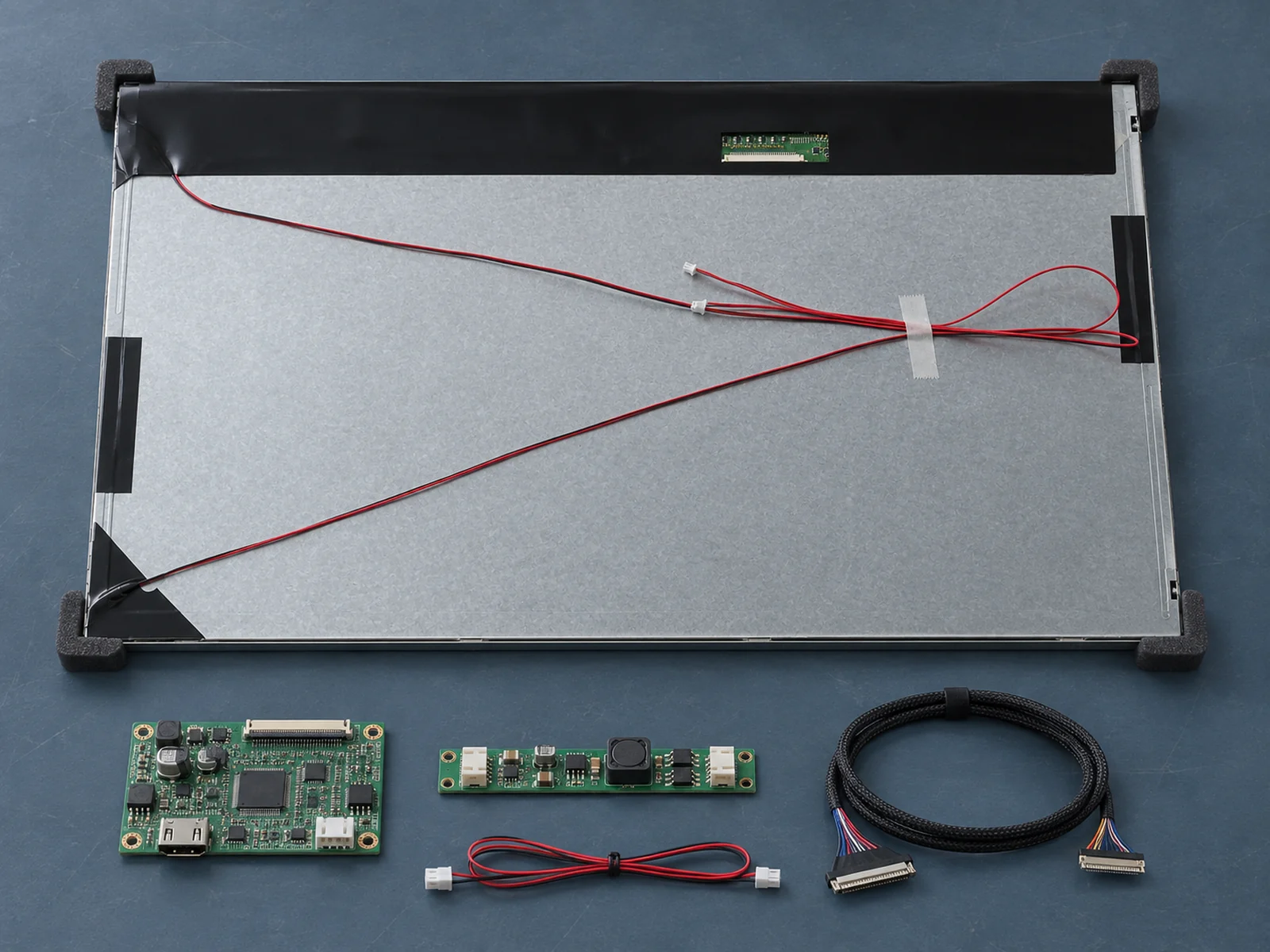
BOE's GV215FHB-N14 is a 21.5-inch Full HD open cell. The two XIANHENG listings describe backlit configurations based on that cell. The listed luminance values are screening figures for the modules. Request a drawing and backlight specification tied to the offered revision, including the minimum luminance and its test conditions. Verify LED current per string, forward-voltage range and dimming input against the matched driver.
| Listed configuration | Published luminance and evidence | When to evaluate it |
|---|---|---|
| GV215FHB-N14-1000 | 1,000 cd/m² on the product page. The available Rev. P0 reference lists 25.44 W typical at the LED load at full duty. | Sample first for shaded or hooded kiosks. Confirm the offered driver, enclosure fit and sustained readability. |
| GV215FHB-N14-2000 | 2,000 cd/m² on the product page. Obtain the offered module revision, backlight load and permitted operating limits before selecting a driver. | Evaluate for stronger exposure if the lower-brightness sample misses the target. Verify hot output, power and low-end dimming. |
Claim: Qualify the backlight, driver and module drawing for each suffix before specifying a common enclosure or power supply.
How Does Cover Glass Change Readability?
Use the production cover, coating and air gap or bond for each sample. Add the PCAP sensor if the finished kiosk uses one. Recreate diffuse daylight and the worst directed reflection at the screen. Record illuminance at the cover, light direction and viewing positions. A lux reading alone cannot reproduce a reflected image of the sun or a bright window.
From the intended eye positions, divide measured white luminance by measured black luminance under the same light to get ambient contrast. Then check the smallest letter, price or instruction on the actual screen. If a bright reflection hides the text, trial a hood, revised tilt or lower-reflection stack and repeat the test before paying for a brighter module.
Claim: Use the same front stack and light geometry to compare the two brightness configurations.
How Should OEMs Qualify the Installed Display?
How Should You Measure Sustained Hot Output?
Run each sample at its intended daytime setting with its matched driver, the production enclosure closed and the expected solar heat load represented. Set the high test ambient within the agreed component limits. Log the module and driver temperatures, display input watts and luminance from startup until temperature and output meet agreed stability limits over a defined interval.
At that hot condition, record emitted white luminance through the cover with the test light briefly blocked from the measurement area while temperature and drive are held steady. Repeat the ambient contrast and live screen checks under the specified illumination. Capture any thermal reduction in backlight current. Use the sustained result and measured input power to decide whether the extra brightness fits the power supply and cooling budget.
Claim: Base the daytime acceptance limit on the output the kiosk can sustain with production cooling and any specified thermal derating in effect.
What Should Dimming and Production Approval Cover?
With the production controller and firmware, sweep the commanded dimming settings at normal and hot conditions. Record the lowest stable luminance and compare it with the site's dimming requirement. Check for visible flicker or abrupt steps and verify recovery after a power cycle. Where the kiosk uses a light sensor, check transitions at its actual mounting position.
Put the daytime contrast and luminance limits, dimming limits and test geometry on the acceptance sheet. Release the tested module and backlight revisions, driver settings, cover stack, mounting and controller preset together. Review changes against the approved sample before repeat orders.
Claim: The production approval should identify the complete configuration that passed both hot readability and dimming checks.
What Advantages Does XIANHENG Offer for Kiosk LCD Selection?
XIANHENG can review a BOE-based display module for sampling and itemize the matched LED driver, video controller, firmware and custom cables where required. Request PCAP touch, cover glass and optical bonding as separate options. For eligible LCDs, 500–1000 cd/m² is a common customization target. Confirm feasibility and higher targets for the proposed build and agree where the luminance is measured.
Browse the Industrial LCD Product Collection or reach out to XIANHENG with the enclosure drawing, cover stack, site lighting and temperatures, host interface, available DC power, required dimming range, and sample and production quantities.
Claim: Share the kiosk's light and thermal conditions so the sample quote identifies the configuration engineering needs to test.


