

East Asia leads the world in urban density, rapid transit deployment, and digital public infrastructure. Cities from Tokyo to Seoul and Shanghai to Taipei are evolving into smart urban ecosystems—places where real-time data, signage, and interactive public services must be both visible and reliable across diverse lighting conditions.
In these urban fabrics, sunlight, reflections from glass facades, and varied indoor/outdoor transitions create a tough environment for conventional displays. High brightness LCD panels solve this by combining high luminance, anti-reflective optics, and rugged engineering.
Below we address the core questions urban planners, transit authorities, and system integrators ask when choosing displays for smart-city deployments.
Claim: High brightness, sunlight-readable LCDs are a foundational technology for reliable public information and interactive services in East Asia’s smart cities.
Table of Contents
- How do high brightness LCDs improve transit information systems?
- Can they make public information more accessible and timely?
- Why do urban retail corridors rely on sunlight-readable displays?
- How do these panels withstand dense urban environments?
How do high brightness LCDs improve transit information systems?
Public transport in East Asia is among the busiest and most punctual in the world. Real-time departure boards, platform signage, and outdoors passenger information need to be readable at busy hours under direct sunlight, artificial lights, and in multi-level stations.
High brightness LCDs—ranging from 1,200 to 2,500 nits for outdoor/partially covered platforms—ensure that schedule changes, delay notices, and emergency alerts remain visible to commuters. These panels integrate seamlessly with existing transport management systems for automated content updates.

Practical deployments in metro systems use optical bonding and AG coatings to reduce specular reflections off platform glass and concourse skylights. Additionally, localized dimming and ambient light sensors tune brightness dynamically, reducing power draw during off-peak hours while guaranteeing visibility during peak daylight. For integrators, the common success criteria include pixel uniformity, color calibration for maps and timetables, and certified MTBF for 24/7 operation.
Claim: Reliable transit communication depends on displays that remain legible under all lighting phases—high brightness LCDs deliver that reliability.
Can they make public information more accessible and timely?
Smart cities aggregate data: air quality, traffic flows, event alerts, and civic notices. The challenge is presenting that data to citizens in a location-appropriate way.
High brightness LCD panels allow public dashboards to remain readable outdoors and in partially shaded plazas. They support multilingual overlays, video, and interactive touch for wayfinding. They are crucial for equitable access to city services, especially for visually-impaired or mobility-challenged users who may rely on clear visual cues.

From a systems perspective, panels must support secure content delivery, scheduled updates, and failover modes (e.g., display cached emergency content if the network is down). XIANHENG-grade LCDs can be integrated into municipal CMS platforms with API-based feed updates and remote health monitoring. Partnerships between display hardware vendors and city IT departments ensure certified compatibility. Additionally, the displays must comply with local accessibility requirements—font size, contrast ratios, and touch responsiveness—so designers often test prototypes in situ before mass deployment.
Claim: Public safety and accessibility improve when real-time civic data is visible and resilient—made possible by high brightness displays.
Why do urban retail corridors rely on sunlight-readable displays?
East Asia’s dense commercial streets—where storefronts stack vertically and facades reflect sunlight—demand displays that cut through environmental noise and attract foot traffic.
Retailers use high brightness LCD panels for window displays, façade signage, and interactive storefronts that maintain visual impact during daytime and sparkle at night. These panels support targeted promotions, multilingual content, and synchronized campaigns across malls and street fronts.

In practice, high brightness plus adaptive content management enables retailers to run context-aware promotions (e.g., commute-hour deals, weather-triggered offers). Integration with mobile apps and beacon systems further personalizes the experience. For landlords and district marketers, pooled ad inventory on LCD networks becomes a new revenue stream—especially in high-footfall corridors. When measuring success, teams track dwell time, conversion lift, and ad revenue per sqm—metrics that often justify rapid rollout across districts.
Claim: Sunlight-readable displays are marketing multipliers in urban retail corridors—they generate measurable engagement and revenue.
👉 Considering a rollout in an East Asian retail district or transit corridor? Explore XIANHENG’s smart-city grade high brightness LCDs and request a localized performance brief.
How do these panels withstand dense urban environments?
Urban centers present mechanical, environmental, and electromagnetic challenges: heavy pedestrian traffic, pollution, humidity, and nearby RF/5G sources.
Robust engineering practices—IP-rated enclosures, EMI-shielded driver boards, anti-fouling glass, and wide-temperature components—ensure displays deliver consistent value and long lifespans.
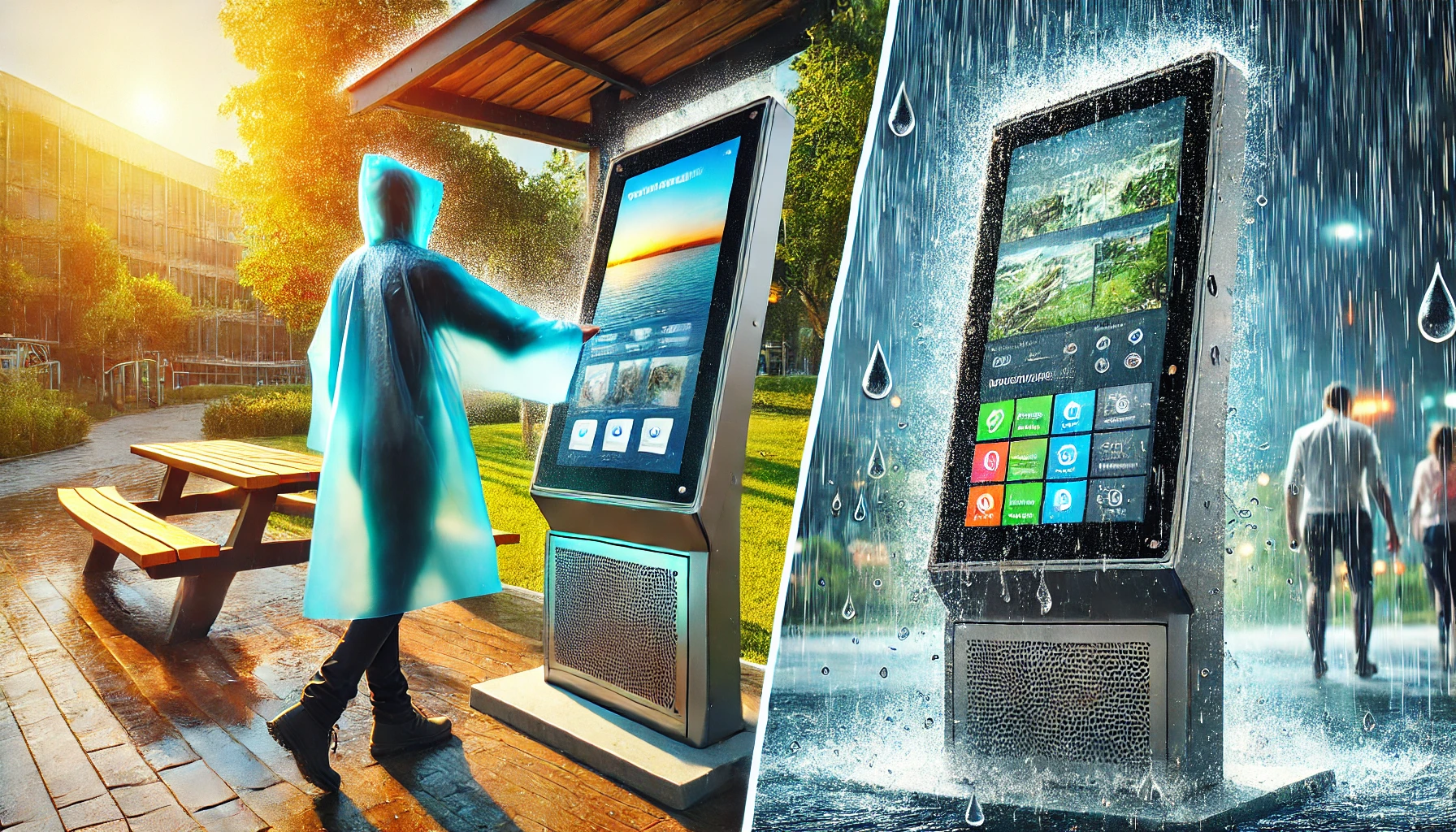
For high-traffic plazas, vandal-resistant glass and tamper detection are common. Coastal cities demand salt-resistant coatings; high-humidity metros require anti-fog bonding and overpressure vents. Maintenance regimes include remote diagnostics (pixel health, backlight current monitoring) and predictive replacement schedules. These measures reduce downtime and total cost of ownership—both critical considerations for municipal procurement. Finally, certification—CE, RoHS, and local telecom approvals—are necessary for smooth procurement and deployment at scale.
Claim: Built for the city: resilience engineering ensures that displays stay online, accurate, and compliant in real-world urban deployments.
Conclusion
East Asia’s smart cities need displays that are visible, responsive, secure, and resilient. High brightness, sunlight-readable LCD panels provide this foundation—supporting transit systems, public information, retail innovation, and municipal services.
👉 Contact XIANHENG for a regional smart-city proposal and request local test samples for your pilot program.


