While discussions often focus on GPUs, CPUs, memory capacity, and networking performance, one important component frequently receives less attention: the display interface used for system monitoring and management.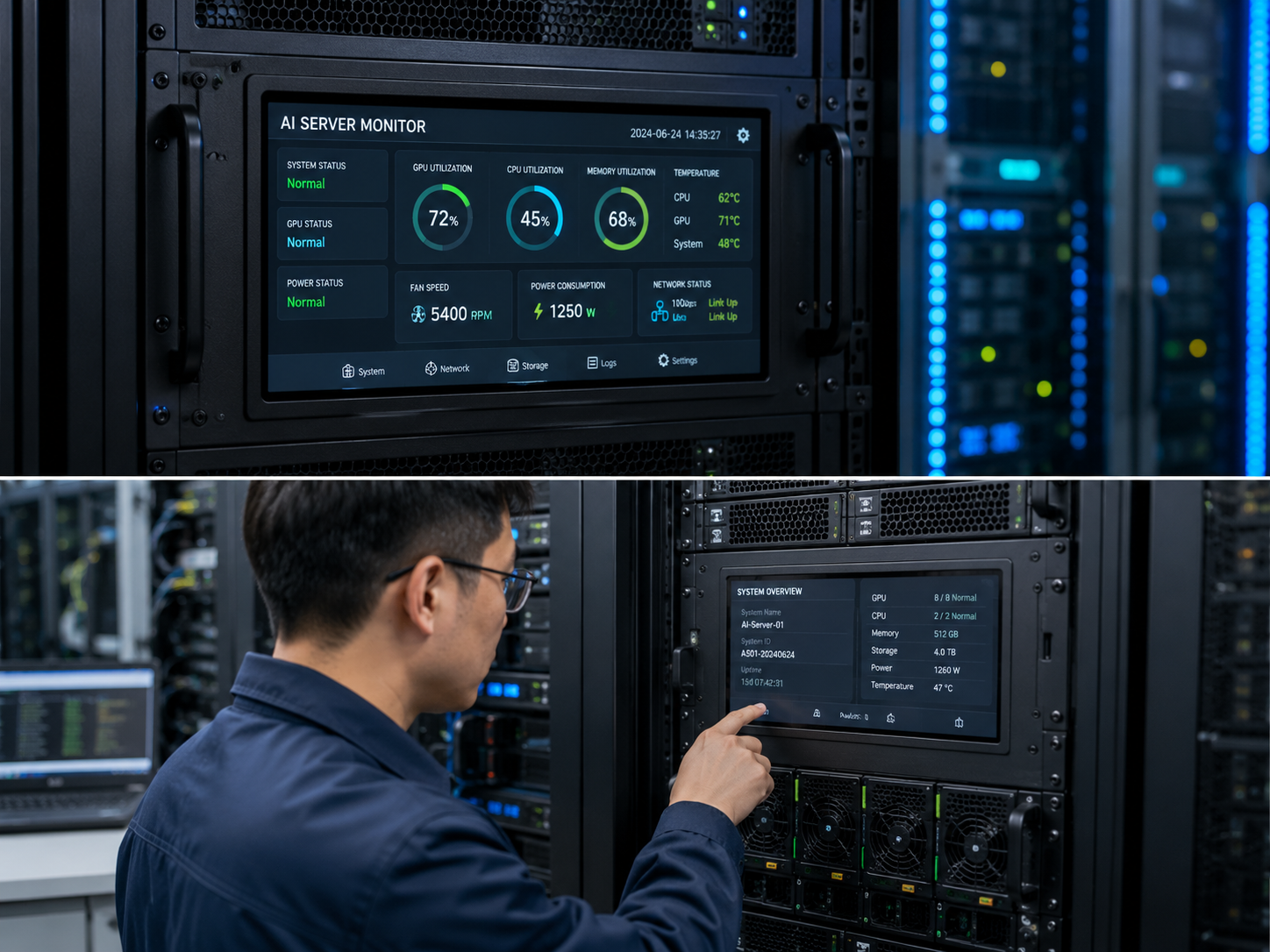
As AI systems become more sophisticated, integrated LCD displays are playing a larger role in improving operational visibility, maintenance efficiency, and system diagnostics.
In my experience supporting industrial display applications, the most successful infrastructure platforms are often the ones that make system status immediately visible to operators and maintenance personnel.
Claim: Integrated displays help simplify AI server monitoring, maintenance, and operational management.
Although most AI servers are managed remotely, local visual interfaces remain extremely valuable for installation, troubleshooting, and maintenance.
Integrated displays provide immediate access to:
When engineers are working directly at a rack or equipment cabinet, accessing critical information without connecting an external monitor can significantly improve service efficiency.
Claim: Local displays provide valuable operational visibility even in remotely managed environments.
The specific information displayed depends on the server architecture and application requirements.
Common display functions include:
In large AI clusters, quick visual identification of system conditions can reduce diagnostic time and improve maintenance workflows.
Claim: Real-time visual feedback improves operational awareness and troubleshooting efficiency.
Maintenance personnel often need immediate access to system information when diagnosing hardware issues.
Without an integrated display, technicians may need:
A local display can reduce complexity by presenting essential information directly on the equipment.
This becomes particularly valuable during:
For high-density AI infrastructure deployments, minimizing service time directly improves operational efficiency.
Claim: Integrated displays can reduce maintenance time and simplify troubleshooting procedures.
AI server displays typically prioritize reliability, readability, and long-term availability rather than consumer-oriented features.
Common technologies include:
Selection criteria often include:
Unlike consumer devices, AI infrastructure equipment is typically expected to remain in operation for many years.
Claim: Long-term reliability is often more important than display aesthetics in AI infrastructure applications.
As AI hardware platforms continue to evolve, display integration requirements are becoming increasingly diverse.
XIANHENG supports AI equipment manufacturers through:
Explore our Industrial LCD Product Collection to learn more about available display technologies.
If you are developing AI servers, GPU appliances, or intelligent computing equipment, reach out to XIANHENG to discuss your display requirements.
Claim: Reliable display systems improve the usability and maintainability of modern AI infrastructure.
Integrated displays provide valuable operational benefits for AI servers by improving monitoring, diagnostics, and maintenance efficiency.
As AI infrastructure becomes increasingly complex, clear visual interfaces will continue to play an important role in equipment management and serviceability.
Selecting the right display solution can help AI hardware manufacturers improve reliability, streamline maintenance, and enhance overall system usability.
If you are evaluating display technologies for AI infrastructure equipment, contact XIANHENG for your project.


