
M200HJJ-L20 sourcing requires an optical acceptance specification tied to the supplied revision. A quotation can combine a contrast figure from one revision, a color-gamut summary from another source, and the same shortened model number. For OEM purchasing, the decision is which documented limits the delivered panels must meet and how both parties will check them.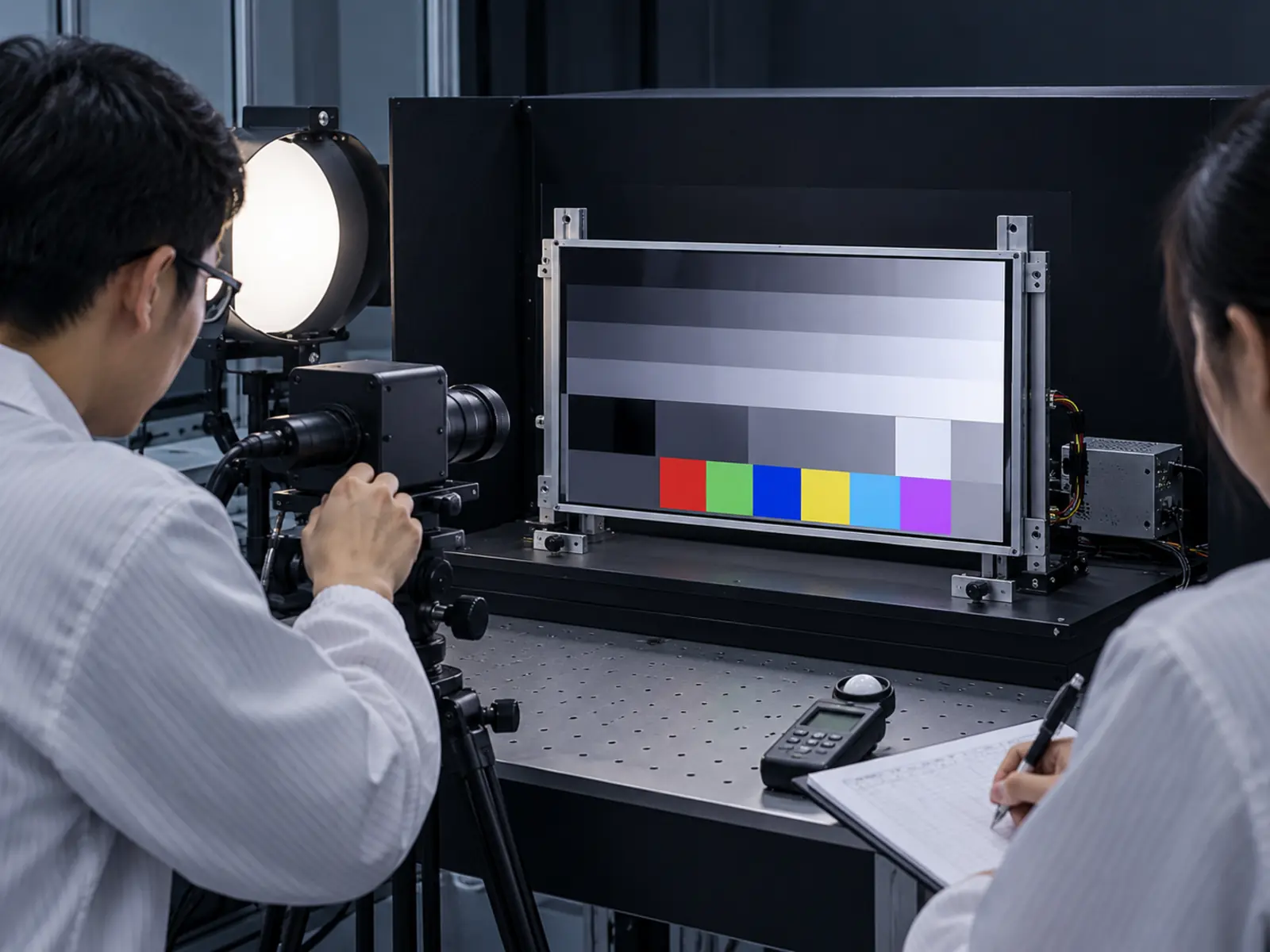
Claim: Optical acceptance depends on an agreed revision, metric, limit, and test method.
Which Optical References Belong to This Order?
Which Documents Actually Apply to the Offered Panels?
XIANHENG's Rev.C4 product page cites Ver.3.6 dated 10 December 2020 and lists 3000:1 typical contrast. Its gamut summary uses 72% NTSC while its notes acknowledge a 74% reference. These entries require source and definition checks; they do not, by themselves, prove that a physical revision changed.
The available Innolux Ver.3.0 approval specification, dated 2 December 2014, expressly covers C1/C2. It cannot establish C4 acceptance limits. Request the complete label photograph, offered revision, applicable manufacturer document, and any relevant change notice. A family-level webpage cannot resolve that applicability.
The listed interface is 30-pin, dual-channel LVDS with a 5.0 V typical panel supply and an external LED driver. Confirm C4 pin assignments, operating limits, and sequencing before sampling; an optical comparison does not approve the wiring.
Claim: The order must identify the applicable supply revision before optical limits are selected.
Which Differences Are Ratings Rather Than Revision Changes?
First compare the meaning of each entry, including its rating column and test conditions.
| Reference encountered | Purchasing interpretation |
|---|---|
| C1/C2 Ver.3.0 contrast: 2000:1 minimum, 3000:1 typical | Different rating columns in one document; neither value automatically becomes a C4 requirement. |
| Rev.C4 webpage: 3000:1 typical contrast | An inquiry reference requiring applicable manufacturer evidence and agreed acceptance limits. |
| 72% and 74% NTSC gamut references | Keep the source, chromaticity system, calculation method, and rating type attached to each figure. |
An NTSC gamut-area ratio does not establish sRGB coverage or color accuracy. Do not average conflicting percentages or convert a typical figure into a guaranteed minimum. For color-sensitive equipment, specify the required color space and measured criteria separately.
Claim: Apparently conflicting numbers must be compared as defined measurements before being treated as revision differences.
How Should the OEM Establish Optical Acceptance?

Which Conditions Make Optical Results Comparable?
Define whether each limit applies to the bare LCD or the finished touch-and-cover assembly. Record panel revision, native image mode, controller settings, LED current or dimming setting, temperature, stabilization time, measurement position, viewing direction, and instrument method.
Measure contrast with the agreed white and black patterns under controlled ambient conditions. Automatic backlight or contrast adjustments should remain in a defined state. For gamut, retain measured primary-color coordinates and the stated calculation method rather than only a percentage.
A cover or bonded touch stack changes the measurement path. Check the completed assembly under equipment lighting as a separate evaluation. Do not reject a covered assembly against a bare-panel laboratory number without an agreed relationship between the two tests.
Claim: Comparable optical results require the same defined configuration, measurement surface, and test conditions.
When Should the Results Change the Purchase?
Approve the acceptance plan before measuring samples, including limits, sampling, measurement uncertainty, and treatment of borderline results. A favorable sample does not turn a typical datasheet entry into a guaranteed batch minimum.
If a panel fails the agreed component test, resolve identity, setup, or supply conformity before release. If the panel passes but the equipment image fails, review the cover, reflections, mounting, and rendering settings. Where the required colors remain outside the demonstrated gamut, evaluate another candidate or revise the OEM's requirement.
Attach the document revision, optical limits, test procedure, accepted configuration, and deviation approvals to the order. Require review before a different panel revision or optical stack is supplied.
Claim: Purchase release requires an agreed acceptance plan and evidence that the proposed configuration meets it.
What Advantages Does XIANHENG Offer for M200HJJ-L20 Optical Approval?

XIANHENG can review the Innolux M200HJJ-L20 Rev.C4 19.5 Inch FHD MVA LCD Panel inquiry against supplied documents and equipment criteria, identify unresolved optical references, and help define the sample configuration. Its desktop-display origin requires project-specific environmental qualification.
The bare LCD excludes touch. Custom PCAP, printed cover glass, surface treatments, and bonding can be assessed with separate final-assembly optical targets. Standard reference luminance is 250 cd/m². Selected models may be evaluated for 500–1000 cd/m² customization; M200HJJ-L20 feasibility requires confirmation, including driver, power, thermal, and optical checks. Higher targets also require project review. Customization needs its own acceptance basis.
Provide target brightness and measurement surface, installation conditions, touch and cover requirements, optical criteria, and quantities. Review the Industrial LCD Product Collection or reach out to XIANHENG to discuss the proposed supply scope.
Claim: XIANHENG can help define an optical supply proposal for documented OEM sample and purchasing approval.


