
A mining display IP rating needs to follow the route taken by dust and water through the installed machine. A crusher operator panel can collect fine material around its bezel, a haul-truck console may be sprayed during cab cleaning, and a portable service terminal can encounter water at its connectors. These exposures call for different evidence.
The procurement problem is often the boundary of the claim. A front face tested for dust and water protection does not establish the same protection behind the mounting plate. The LCD, touchscreen, gasket, enclosure, connectors, and installation method must be considered together before an IP code becomes an equipment specification.
Quick Answer: IP65 is a useful starting requirement for many dusty mining HMIs exposed to defined water jets. IP66 may be needed for powerful-jet exposure. IP67 addresses temporary immersion under specified test conditions and does not automatically establish jet protection. Sheltered panels may justify IP54, while high-pressure cleaning requires a separately specified rating and test standard. No single IP rating applies to all mining displays. State whether protection covers the front face, the complete monitor, or the installed equipment, and validate every seal, cable entry, connector, cover, and mounting interface within that boundary.
Claim: A mining display IP rating is meaningful only when its exposure, tested boundary, mounting conditions, and maintenance state are defined.
1. Which Dust and Water Routes Should the IP Requirement Cover?
Begin with the machine's operating and cleaning conditions. Ask where material settles, where water lands, which surfaces remain wet, and whether a maintenance worker can direct a hose toward parts normally shielded during operation.
Direct answer: Specify dust, splash, water jets, powerful jets, immersion, and high-pressure cleaning as distinct exposure questions. Then select the enclosure tests that address the credible conditions. The largest water-protection numeral is not a substitute for this analysis.
How Should Fine Mineral Dust Be Described?
Record whether dust is airborne, deposited, driven toward the display by airflow, or released when nearby equipment is serviced. Identify the actual material and any abrasive or conductive characteristics relevant to the equipment design.
IP5X describes dust protection with limited ingress permitted subject to the standard's criteria; IP6X describes dust-tight protection under its test conditions. Neither code alone establishes resistance to abrasive wear, chemical attack, or every site-specific dust mixture.
When Is IP54 a Reasonable Candidate?
A sheltered plant panel may be assessed against dust and splashing where direct jets are excluded. IP54 can be considered only when those conditions cover actual operation, housekeeping, and maintenance access.
A roof does not automatically create a protected environment. Check wind-driven exposure, leaking pipes, nearby spray, wet gloves, and cleaning methods. A panel behind a cabinet door also needs an assessment of what happens when that door is opened.
How Should IP65 and IP66 Be Distinguished?
Both codes include dust-tight protection. Their water tests differ: IPX5 addresses water jets, while IPX6 addresses powerful water jets under the applicable standard's conditions. Specify the relevant test rather than describing either as unrestricted hose resistance.
For a crusher station or exposed machine HMI, the choice should follow the documented spray. A short-distance pressure washer, hot detergent spray, or repeated abrasive slurry exposure requires additional review beyond a general IP65 or IP66 label.
Does IP67 Automatically Cover Washdown?
No. Temporary immersion and jet exposure load an enclosure differently. IPX7 and IPX8 concern immersion conditions and do not independently demonstrate compliance with the jet tests.
If both jet exposure and temporary immersion are required, ask for evidence covering both, such as a documented dual rating. For IPX8, obtain the agreed immersion conditions; the code does not define unlimited depth or duration for every product.
What Must Be Specified for High-Pressure Cleaning?
Identify the applicable standard and exact designation, including whether the project calls for IEC 60529 IPX9 or an ISO 20653 designation involving K. Do not silently substitute one designation, procedure, or report for another.
The production cleaning instruction should also identify nozzle, pressure, temperature, distance, direction, detergent, duration, and prohibited targets. A water-ingress test does not automatically demonstrate compatibility with the cleaning chemical or an unrestricted steam-cleaning process.
| Exposure Question | Candidate Requirement | Evidence Still Needed |
|---|---|---|
| Sheltered dust and splash | IP54 where justified | Cleaning and access do not add jet exposure |
| Dust and defined water jets | IP65 | Installed boundary and prescribed jet conditions |
| Dust and powerful jets | IP66 | Complete sealing path under the relevant test |
| Temporary immersion | IP67 | Immersion conditions; separate jet evidence if required |
| High-pressure cleaning | Project-specific IPX9 or K-designated requirement | Exact standard, test report, and cleaning compatibility |
Claim: Select dust and water tests from the exposure route; immersion and cleaning requirements must not be inferred from a numerically higher code.
2. Where Does the Display Protection Boundary Begin and End?
A panel-mounted HMI shares its sealing boundary with the machine enclosure. The supplier's front assembly may stop dust or water at the viewing surface, while installation introduces another joint around the cutout.
Direct answer: Draw the protected volume and trace every route into it: glass perimeter, bezel, panel gasket, rear enclosure, fasteners, connectors, cable entries, vents, and access covers. Assign responsibility and evidence to each interface.
What Does Front-Only Protection Actually Cover?
A front-only claim applies to the specified exposed face under stated installation conditions. It may depend on a mounting plate, supplied gasket, clamp arrangement, and panel thickness. The rear electronics can remain dependent on a separately protected cabinet.
Procurement should record that limitation explicitly. An open-frame display with a sealed front should not be described as a fully sealed monitor, and a bare industrial TFT LCD has no complete enclosure boundary of its own.
How Can the Mounting Cutout Become the Leak Path?
An oversized cutout, uneven panel, rough weld, coating defect, or insufficient gasket overlap can allow ingress around an otherwise suitable display. Clamp force can also vary with panel thickness and bracket stiffness.
Specify cutout tolerance, surface condition, flatness, gasket position, compression, fastener sequence, and installation torque where applicable. More tightening is not always better: distortion can unload one part of a seal while overstressing another.
Why Must Connectors Be Evaluated in Their Actual State?
A connector's protection may depend on its approved mating half, cable assembly, seal, locking condition, or cap. Its mated rating should not be applied automatically to an unplugged service port.
Check unused ports, replacement cables, strain relief, cable diameter, and bending near the connector. A rated component installed in an unsealed opening does not transfer its rating to the enclosure around it.
What Do Pressure-Equalization Vents Change?
A suitable vent can help manage enclosure pressure differences, but it becomes part of the protected boundary. Its membrane, mounting seal, orientation, location, and exposure need to match the application.
Do not assume a vent eliminates condensation. Internal moisture, surface temperatures, pressure changes, and the ventilation design still matter. A blocked or contaminated vent may also behave differently from the clean sample used in qualification.
Does Optical Bonding Create an IP-Rated Assembly?
Optical bonding can fill the internal gap between display layers, but it does not independently seal every perimeter, connector, or mounting interface. Its optical and mechanical functions should remain distinct from the enclosure claim.
Confirm the glass retention and perimeter sealing design separately. Water can reach electronics through a rear cable entry even when the LCD-to-glass gap is completely filled and visually clear.
Claim: Protection belongs to the defined assembly and installation; individual component ratings cannot be combined into an untested whole-system claim.
3. How Do Cleaning and Service Change the Sealing Condition?
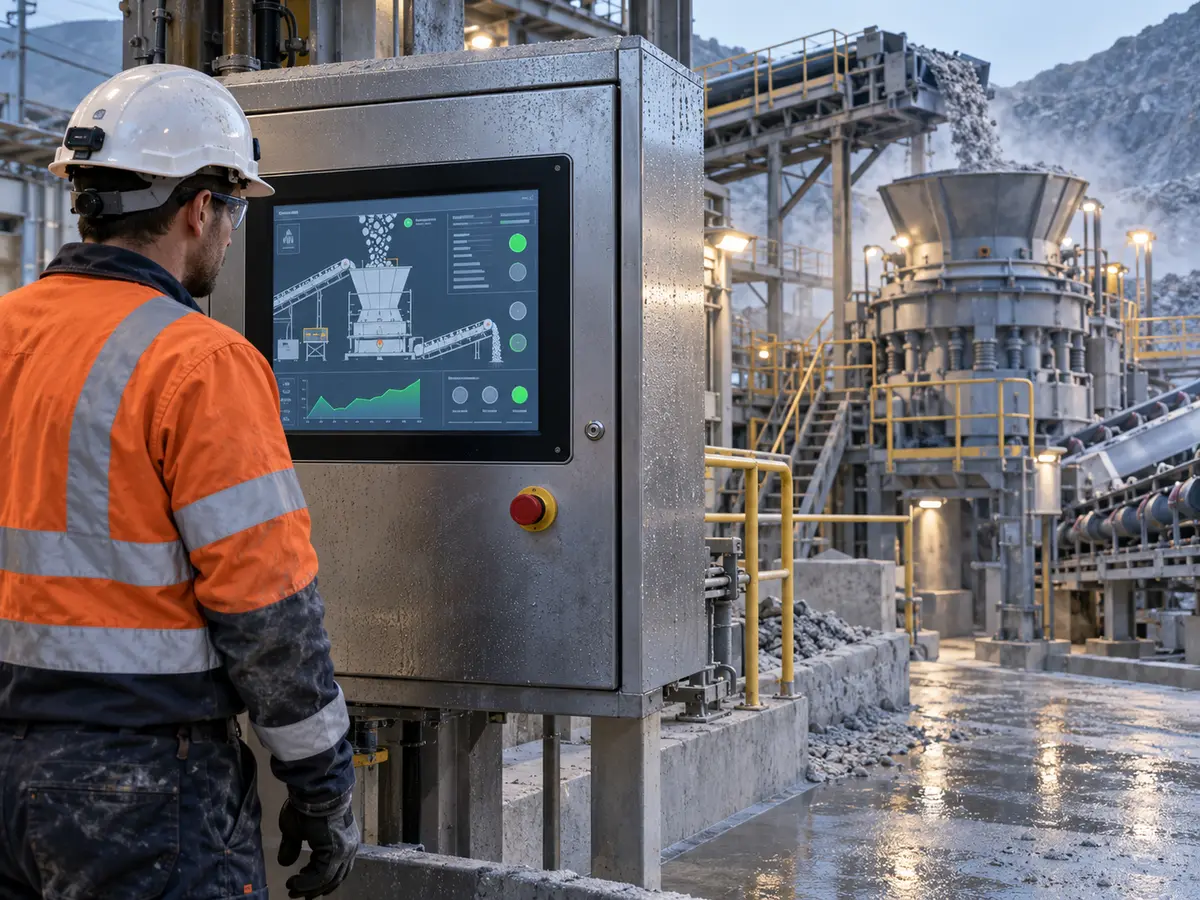
Mining displays accumulate material during use and are opened, disconnected, cleaned, or replaced during service. Those events can change the physical condition that originally supported an IP rating.
Direct answer: Include dust removal, washdown, connector disconnection, cover opening, gasket replacement, and reassembly in the maintenance design. Define the condition in which cleaning is permitted and how the sealing boundary is restored afterward.
Why Should Dust Be Removed Before Opening a Housing?
Material trapped on a bezel or service cover can fall into the assembly when it is opened. Dust on a gasket can also prevent clean contact after reassembly or abrade the sealing surface as the parts move.
Use an approved removal method suited to the material and equipment. Blowing compressed air into a joint can drive contamination toward a weak interface; a cleaning method should not be assumed harmless because it avoids water.
How Can a Wash Bay Exceed the Operating Requirement?
A machine sheltered from rain during operation may encounter direct spray from below, behind, or at a close distance during cleaning. The wash bay can therefore set the water requirement even when the operating location is relatively protected.
Define whether the display remains installed, which covers are closed, whether service ports are capped, and whether power is isolated. Turning power off may reduce some electrical risks, but it does not prevent water ingress.
What Must Be Checked About Detergents and Slurry?
IP water testing does not establish compatibility with alkaline cleaners, oils, fuel residues, dissolved minerals, or abrasive slurry. These can affect glass coatings, seals, adhesives, metals, and connector materials through separate mechanisms.
Specify the actual agent, concentration, temperature, contact time, rinse, and drying procedure. Material compatibility and abrasion assessment should support the cleaning instruction alongside the ingress test.
Does a Sealed Touchscreen Work Correctly When Wet?
Ingress protection and wet-surface touch behavior are separate requirements. Water on the glass can affect input recognition or create unintended responses without entering the enclosure.
Test the approved touch controller, firmware, cover glass, gloves, and grounding under the intended surface condition. Interaction and physical-control allocation are discussed in How Do Touchscreens Improve Mining Equipment Operation?.
What Should Happen After a Display Is Replaced?
Check the mounting surface, gasket identity, adhesive condition, fasteners, cable locks, caps, and strain relief. State which seals can be reused, which require replacement, and whether a curing period applies before exposure.
A field replacement should restore the controlled construction. An extra bead of unapproved sealant or a different gasket may change compression, chemistry, service access, or the joint's behavior without providing evidence of protection.
Claim: The approved service process must preserve or restore the tested sealing condition, including connectors, gaskets, mounting, and cleaning restrictions.
4. What Evidence Should Support the Installed Mining Display IP Rating?
A catalogue code is useful for screening, but engineering acceptance needs the applicable report and installation conditions. The evidence should show what was tested, how it was assembled, and which criteria were applied.
Direct answer: Obtain the standard, designation, tested model and revision, protected boundary, assembly details, operating state, exposure procedure, acceptance results, and installation limitations. Validate the production installation and any additional mining-specific duties separately.
What Should Be Requested with an IP Claim?
Ask for the relevant test report or traceable supporting documentation. Confirm whether it covers the purchased product, a similar model, a front component, or an assembly using a particular mounting fixture.
Review the specimen's cable entries, connectors, caps, vents, gasket, fasteners, and orientation. A report for a sealed version with blanking plugs may not cover a delivered unit equipped with different ports or cables.
How Should the Production Installation Be Represented?
Use the intended mounting plate, cutout, panel thickness, surface finish, brackets, seals, cable set, and assembly process. Where tolerances can affect sealing, select representative conditions through an agreed engineering assessment.
Document installation photographs and drawings alongside the test result. This makes the boundary reviewable when the display moves to another cab, cabinet, or machine variant.
Should Vibration and Thermal Aging Precede an Ingress Check?
Where the service-life requirement calls for it, additional testing can examine sealing after relevant vibration, temperature cycling, cleaning, or repeated access. Those exposures may loosen connections, change gasket compression, or stress bonded joints.
Define the sequence and acceptance criteria in the equipment plan. Do not imply that standard IP testing automatically includes aging or that an arbitrary combined test represents every mining installation.
What Functional Checks Belong beside the Ingress Result?
Apply the standard's ingress criteria and separately check required image operation, touch, controls, communication, and recovery at agreed stages. Preserve both results; a functional demonstration alone does not replace the ingress assessment.
Record moisture or dust locations, intermittent faults, connector behavior, and persistent optical changes. The unit should not be declared acceptable solely because it starts again after drying if the specified criteria were not met.
Which Requirements Remain Outside the IP Code?
IP protection does not independently establish corrosion resistance, chemical compatibility, UV durability, impact strength, abrasion life, EMC performance, wet-touch capability, or suitability for explosive atmospheres. Each relevant duty needs its own evidence.
The equipment manufacturer should also review thermal management when sealing reduces air exchange. System-level display responsibilities are covered in Why Does Mining Equipment Need Industrial LCD Displays?.
How Should the Claim Remain Traceable in Production?
Control seal materials, dimensions, suppliers, compression, fasteners, cables, connector seals, ports, vents, adhesive processes, and inspection criteria. Define handling and rework rules for damaged glass, disturbed seals, or scratched mounting surfaces.
If routine leak screening is used, correlate it with the qualification method and its intended defect coverage. A pressure-decay result should not be presented as an automatic substitute for every dust and water test.
Claim: Acceptance requires traceable enclosure evidence, a matching installation, and separate verification of the duties that the IP code does not address.
5. What Advantages Does XIANHENG Offer for Mining Display Sealing Projects?
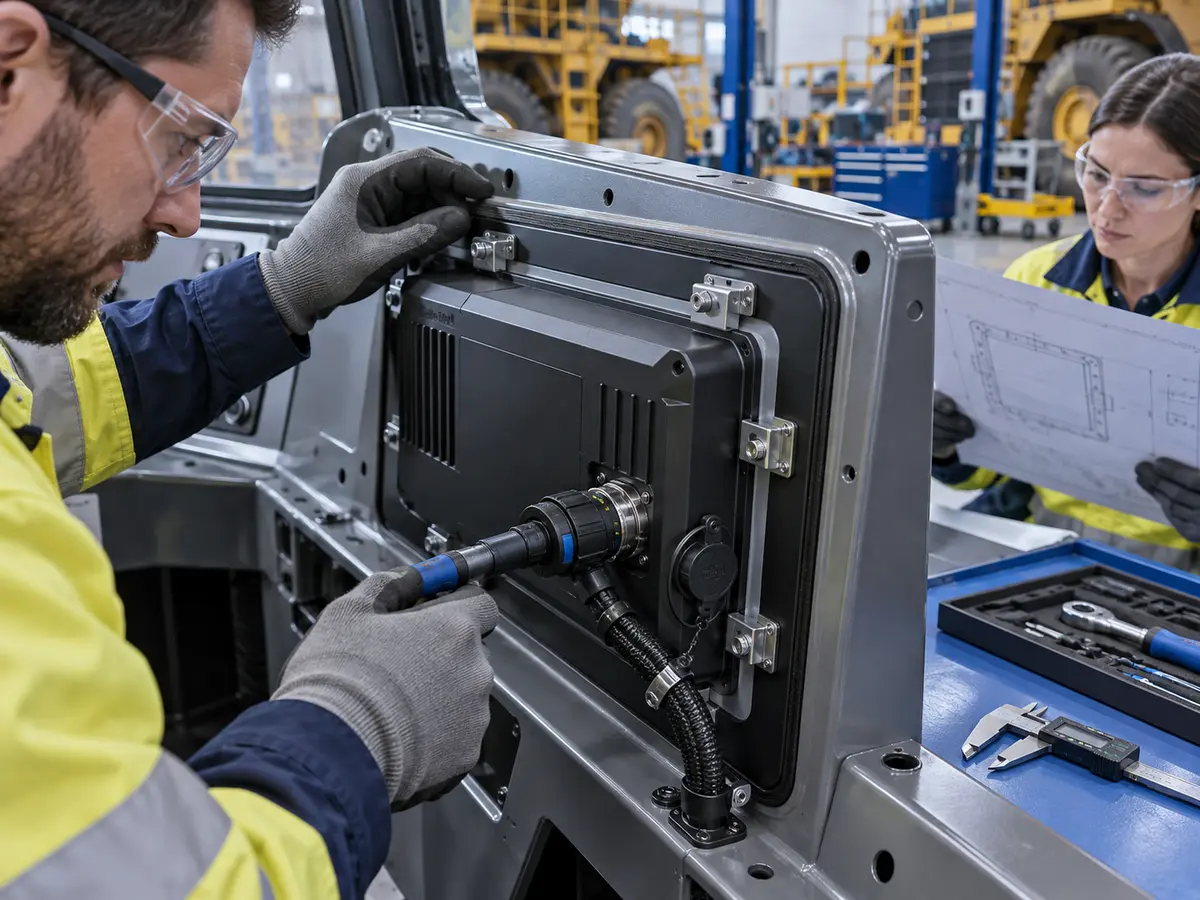
XIANHENG supports display integration for mining-machine consoles, crusher panels, conveyor stations, process equipment, maintenance terminals, and replacement projects. Work can start from a required protected boundary or an existing installation with a recurring ingress problem.
Direct answer: XIANHENG can coordinate LCD selection, PCAP or resistive touch, cover glass, bonding, mechanical drawings, controllers, cables, samples, and replacement analysis. Any stated ingress rating must match the supported configuration and evidence. Final machine enclosure design, installation, cleaning rules, hazardous-location assessment, and equipment approval remain with the responsible manufacturer and assessment parties.
How Can XIANHENG Help Define the Display Boundary?
Customers can provide mounting drawings, photographs, cutout dimensions, panel thickness, exposed faces, cable paths, service openings, cleaning conditions, and the required IP designation. These inputs help distinguish a sealed front from a fully enclosed monitor requirement.
The project can identify which joints belong to the display assembly and which remain part of the customer's cabinet or cab. That allocation should appear in the drawings and approval records.
Can Touch and Cover Glass Be Coordinated with Sealing?
Supported development can coordinate glass outline, viewing window, printed border, thickness, edge treatment, holes, adhesive regions, touch sensor, and bonding construction. The mechanical design should preserve the intended seal without loading the LCD unevenly.
Wet-touch behavior, glove input, optical performance, and cleaning compatibility remain distinct checks. A sealed glass front should not be used as evidence that all of those functions meet the customer's application.
How Can Samples Support Equipment Testing?
A representative sample can include the intended LCD, touch, glass, frame, controller, and cables. The customer can install it using the production mounting process and submit the defined enclosure to the appropriate test procedure.
Findings should identify the entry location, specimen configuration, surface condition, exposure, and functional effect. Supported display-side revisions can then be reviewed and retested where they affect the evidence.
What Helps Resolve an Existing Ingress Problem?
Provide original component models, assembly drawings, seal details, cable and connector information, cleaning instructions, failure timing, and inspection photographs. Record whether faults follow rain, washing, temperature change, or service access.
XIANHENG can compare replacement options across mechanics, optics, interface, touch, power, and lifecycle. Candidate panels are available through the Industrial LCD Product Collection; the selected panel still requires a suitable enclosure.
What Information Should Customers Send to Start?
Useful inputs include mining application, display location, exposed surfaces, dust type, water and cleaning conditions, required rating and standard, mounting drawing, touch method, connector state, service process, temperature, quantity, schedule, and lifecycle target.
To discuss a sealed mining HMI front, dust-protected display assembly, washdown installation, customized touch-and-glass stack, or replacement project, please reach out to XIANHENG.
Claim: XIANHENG supports mining sealing projects by coordinating display-side construction and samples around a documented boundary, installation, and test requirement.


